


Under the bright lights and high stakes of the San Antonio Stock Show & Rodeo, competitors prepare for split-second rides that can define their entire season.
This year, tucked between livestock trailers and arena gates, another kind of preparation was underway.
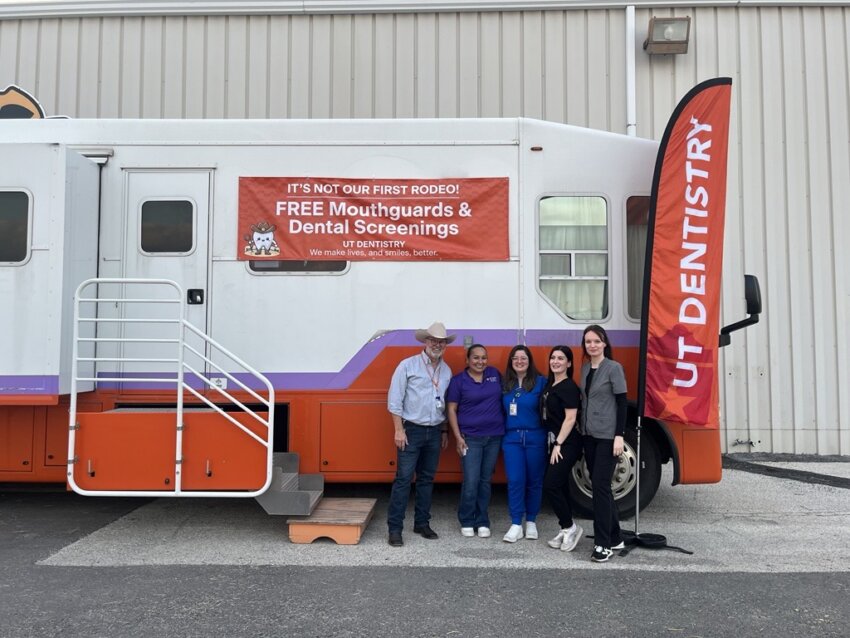
Faculty and students from the School of Dentistry brought its mobile dental clinic to the rodeo grounds, offering free comprehensive dental screenings and custom-fit mouthguards to competitors, along with an important message about tobacco and nicotine use.
Led by Associate Dean for Patient Care Scott Stafford, DDS, MBA, the team examined teeth for cavities and plaque buildup, and gums, tongues and throats for any signs of oral cancer.
Trauma prevention
Third-year dental student Vanessa Martin felt the school’s outreach blended service with safety.
“I’m really excited to be here,” Martin said. “The rodeo is such a fun season, so I wanted to be part of it and give back to our community.”
Participating in a rodeo, she said, naturally introduces contestants to physical risks.
“They’re riding these powerful animals. They can easily fall and hurt themselves,” she said. “Having a mouthguard is important to protect their teeth and prevent breaking or chipping. It’s a safety precaution.”
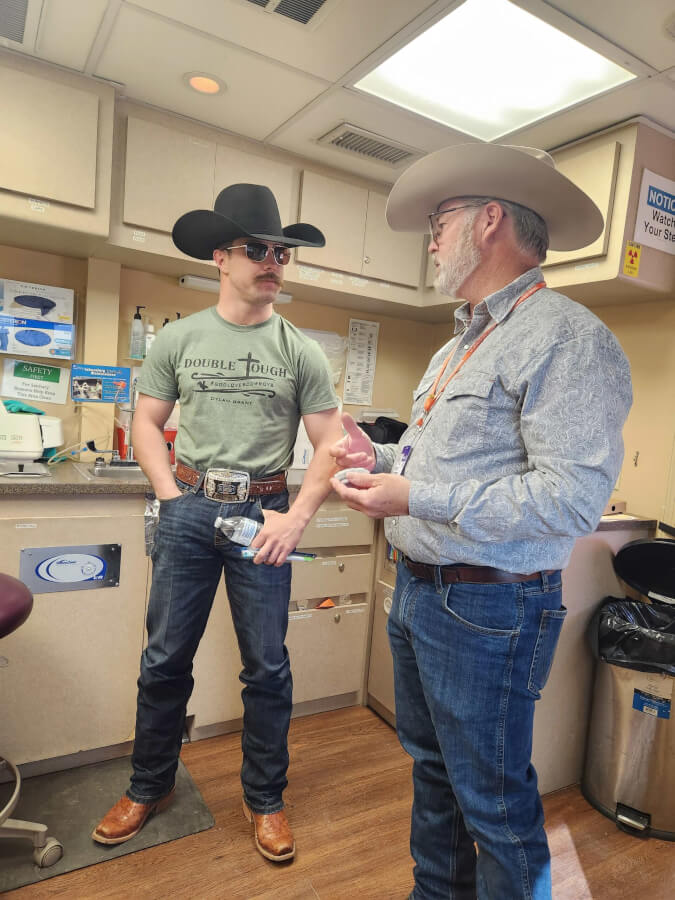
Unlike over-the-counter guards, custom mouthguards are created from a precise digital scan of each athlete’s mouth. Using an intraoral scanner, providers capture a digital impression that is sent to a lab where a 3D model is printed. From there, a custom guard is fabricated specific to the needs and dentition of each individual. “An athlete’s comfort and confidence in a guard are paramount for their use and compliance,” Stafford said.
Donnie Haralfa, who competes in bareback riding, said the custom mouthguard is likely to make a difference.
“I don’t necessarily wear one,” he said of store-bought guards. “But if I get one that fits right, I think it might be a little different.”
But beyond dental trauma, the screenings opened the door to a conversation about nicotine use.
Nicotine and cancer risk
Rodeo culture, like many athletic subcultures, has historically included cigarettes, smokeless tobacco, vaping and nicotine pouches. Stafford said the mouth is often the first place damage from these products appears.
“Oftentimes, because of the mechanism of the product, you’ll see irritation where it’s placed,” Stafford said. “With smokeless tobacco, it can lead to cavities along the root surface, periodontal disease or a change to the lip and gums into what we call corrugated tissue inside the lip — and those can be precancerous situations.”
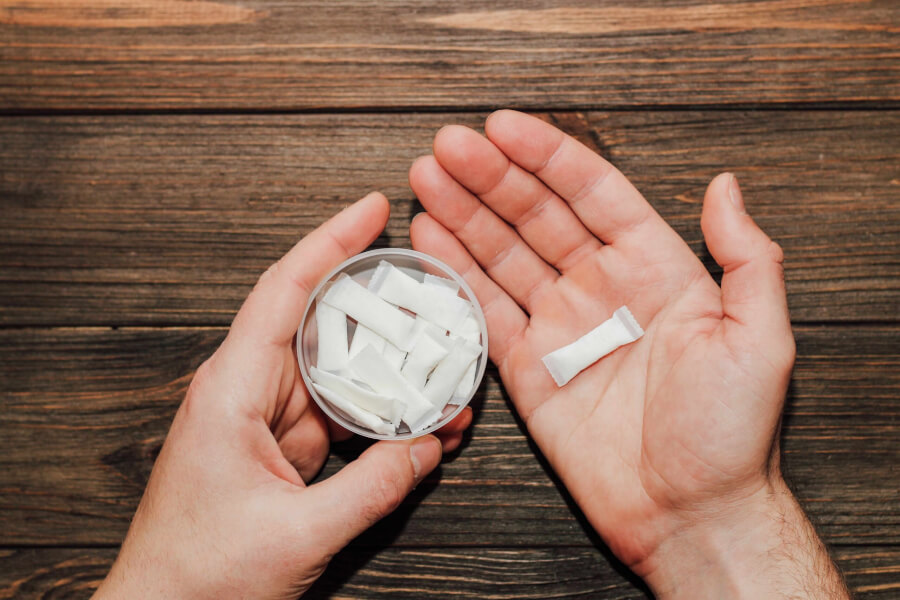
He pushed back on the assumption that smokeless products or vaping are safer alternatives.
“None of those are safer,” Stafford said. “Smokeless tobacco leads to a different type of cancer. And vaping is unregulated — there are all kinds of ingredients that, when heated, release toxins. It’s very dangerous.”
For athletes whose careers depend on their bodies healing quickly, nicotine poses another risk.
“Nicotine specifically inhibits healing of ligaments, tendons and bones,” Stafford said. “If there’s a fracture or strain, it reduces the body’s ability to heal properly.”
Some competitors acknowledged that oral health isn’t always top of mind.
“You brush your teeth,” said rodeo competitor Colton Clemens. “If you’re not hurting, you don’t really think about it.”
When asked whether tobacco use is common among competitors, Haralfa acknowledged it with a shrug. “Probably not good for us,” he said.
Support, not judgment
During screenings, students approached tobacco conversations with empathy rather than judgment.
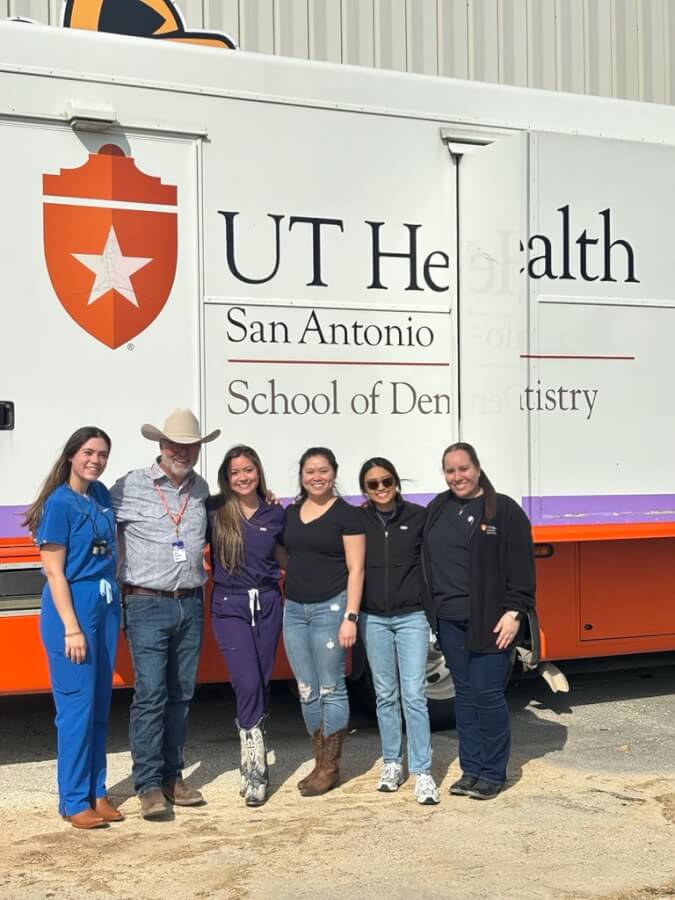
“I kind of gauge where they’re at,” Martin said. “If they’re open to it, then I can give them more information and support and resources.”
Stafford said that openness is critical.
“If we come at them in a judgmental manner, they’re not going to be open to the conversation,” he said. “When they’re ready to make a change, we should be there to support it.”
He encouraged competitors — and all patients — to speak honestly with their dental providers.
“Lean on them,” Stafford said. “Dentists and dental hygienists have tools and resources to help you transition away from tobacco products and vaping. It’s one of the most powerful steps you can take for your overall health.”
Midwest Dental donated supplies, allowing the School of Dentistry to provide mouthguard services at no cost.